
Start with the onboard charger of the car
When choosing a wallbox, the key is to align the vehicle, the home electrical installation and daily charging habits. Charging speed is not determined by the wallbox alone. If the car has a 3.7 kW onboard AC charger, a faster wallbox will not make AC charging faster.
The number of phases matters as well. A car that charges on one phase takes only the power of a single phase from a three-phase station. You will find the onboard charger rating in the technical data of the vehicle or in our selection by vehicle.
How much power you really need
Rough charging time is the energy to add divided by power. Adding 30 kWh, roughly 150 to 200 km of normal driving, takes about 8 hours at 3.7 kW and just under 3 hours at 11 kW. In practice it takes slightly longer because of losses.
Common ratings are 3.7 kW (1×16 A), 7.4 kW (1×32 A), 11 kW (3×16 A) and 22 kW (3×32 A). If you park at home overnight, 11 kW or less is usually enough.
Check the breaker and installation
The station must not overload the main breaker of the house while cooking, water heating or a heat pump are running. An electrician will assess the capacity of the connection, the supply cable, and the protection. If capacity is limited, a lower charging current or dynamic power control helps.
Connector, cable and mounting
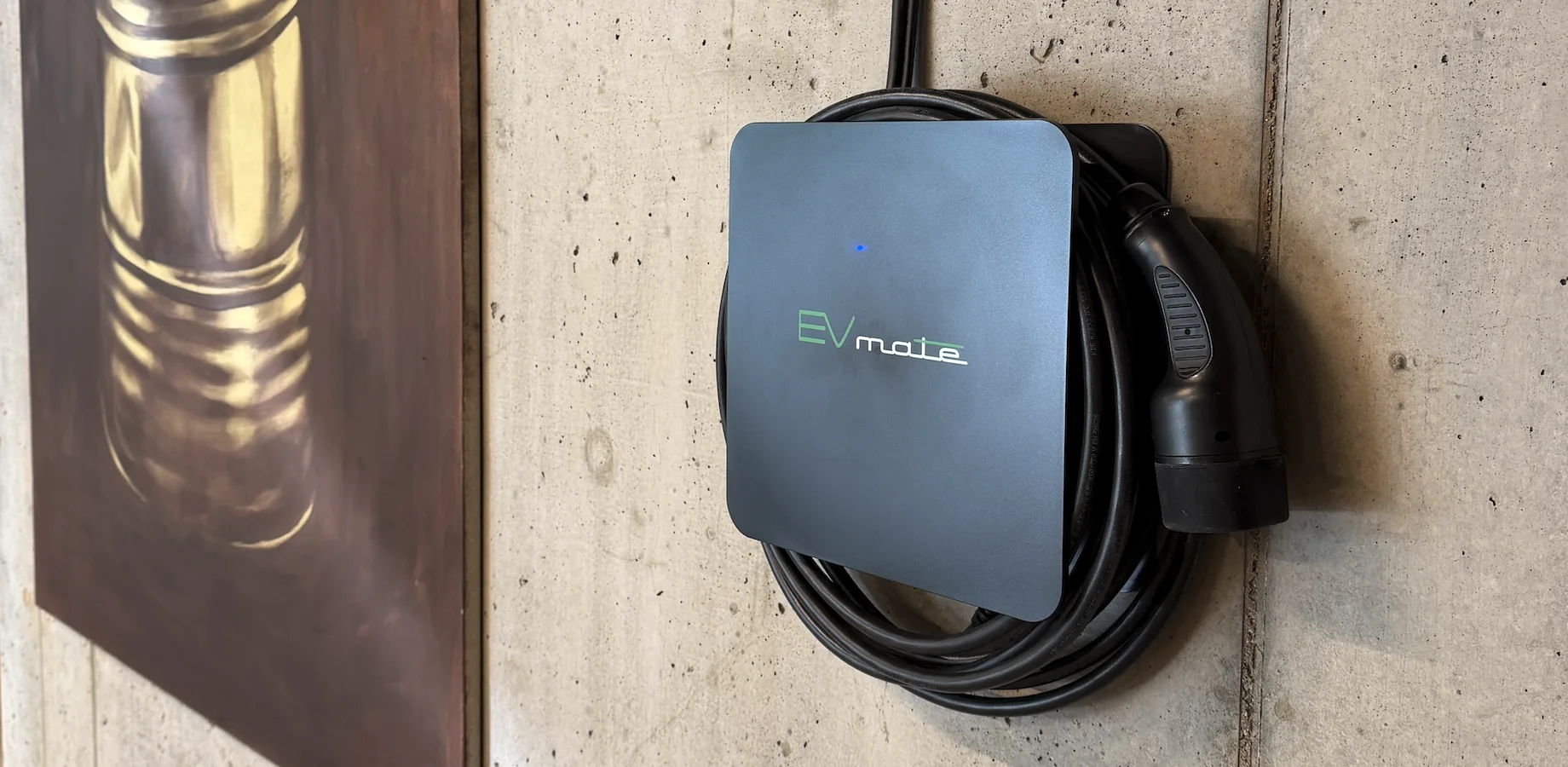
Type 2 is the common connector in Europe, and some older cars use Type 1. Cable length, mounting position and whether the customer prefers a fixed cable or socket are also important. A fixed cable is convenient every day; choose its length from the real route to the charging port.
When smart functions pay off
Solar control makes sense if the car is often parked at home during the day. The EVmate STR version uses data from selected inverters for this. RFID is useful where several people share a station. If you plan an installation after 1 January 2027, note that EN ISO 15118-20 applies to new private Mode 3 points.