
When it makes sense
Home charging can work well with photovoltaic production when the setup matches the installation output and the household routine. It helps most when the car is parked at home during the day or at weekends. If you commute every day, part of the energy will come in the evening from the grid or a home battery.
For many users, a reliable setup with sensible power is more useful than the highest theoretical charging speed.
Why the minimum current matters
A standard wallbox talks to the car over PWM according to IEC 61851 and cannot offer less than 6 A. That is about 1.4 kW on one phase and about 4.1 kW on three. When the surplus is smaller, charging must stop or part of the energy comes from the grid.
This is why single-phase charging suits weak sunshine. ISO 15118 communication moves this limit: current can be set in smaller steps and is limited mainly by the minimum of the car itself.
What dynamic control does
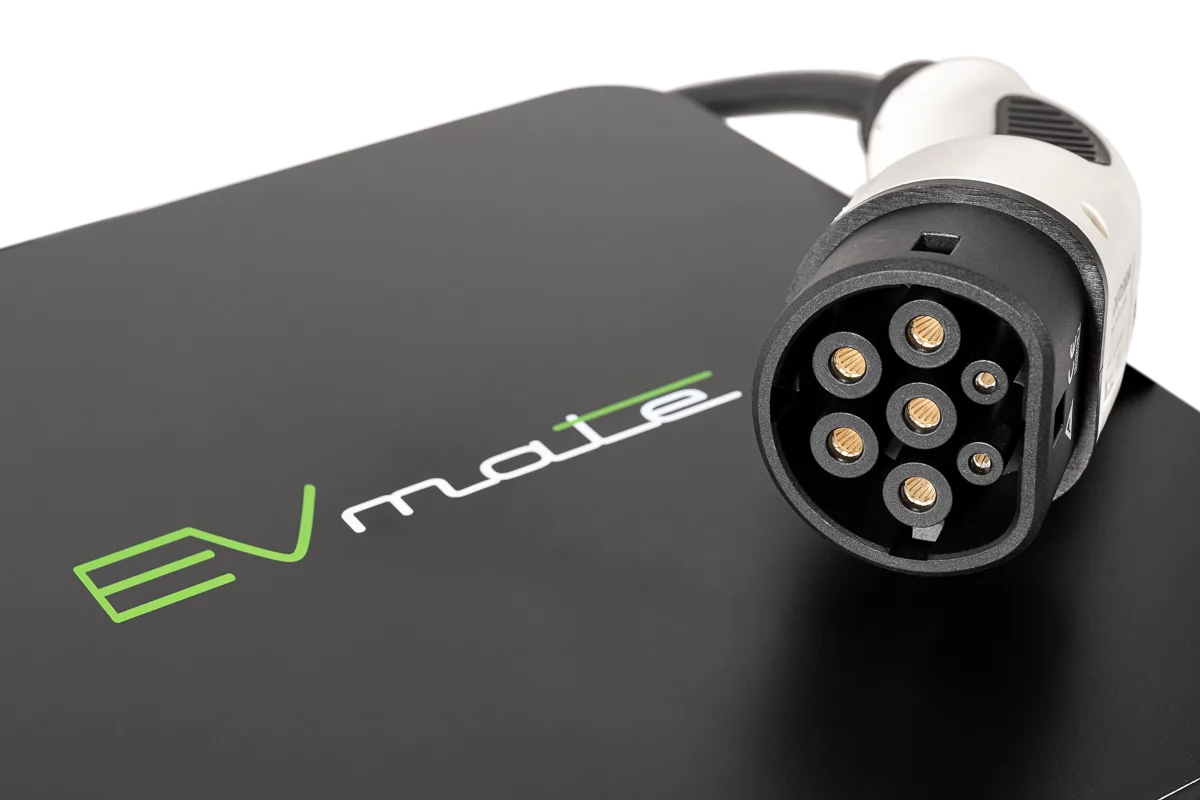
Control needs to know how much the house is producing and drawing right now. A meter at the connection or the inverter provides this. The station then adjusts the current continuously. The EVmate STR version can read this data directly from selected inverters over local Wi-Fi, so no separate metering is needed.
What to watch out for
Clouds change production within minutes, and some cars do not like frequent current changes or stops. Control should therefore be smooth rather than react to every cloud. If you have a home battery, decide how far the car may discharge it so that enough energy remains for the evening.
Before ordering, it is worth checking the main breaker, cable route and regular parking position. Also check that your inverter is supported.